
A school’s buildings and grounds are exposed to rain, wind, frost, pollution, falling leaves and organic growth throughout the year. Over time, roofs may collect moss, windows can become weather-stained, gutters may fill with debris and render can lose its clean, professional appearance.
For schools and education premises, exterior cleaning is not simply about kerb appeal. Planned maintenance can support safer access routes, help protect the building fabric and create a well-maintained environment for pupils, staff, families and visitors.
So, how often should a school invest in exterior cleaning?
The answer depends on the age and condition of the buildings, the site’s surroundings, the amount of footfall and exposure to weather. However, a planned schedule gives your premises team a practical starting point and helps prevent cleaning from becoming an urgent, disruptive job.
Why planned exterior cleaning matters for schools
The Department for Education’s guidance on maintaining your school estate recommends maintaining buildings so they remain safe, warm, weatherproof and suitable for teaching and learning.
Irregular maintenance can contribute to:
- Water ingress and damp
- Disruption to lessons and school operations
- Avoidable repair costs
- Deterioration of roofing and external surfaces
- Slip hazards around entrances and walkways
- A tired or poorly maintained appearance
- More complicated emergency works
A planned exterior cleaning programme does not replace building surveys, statutory inspections or specialist repairs. It does, however, form an important part of planned preventative maintenance (PPM).
It can also help your school identify issues earlier. For example, a gutter clean may reveal a damaged joint, while window cleaning may highlight cracked glass or failing seals that need to be referred to a suitable contractor.
A practical school exterior cleaning schedule
The schedule below is a general guide. Your school should adapt it to the site’s condition and risk assessment, particularly if the premises are surrounded by trees, located in a shaded area or include older buildings.
Monthly: visual checks and early warning signs
A member of the premises team should include the building exterior in regular site walk-rounds. These checks do not need to involve specialist cleaning, but they can help identify problems before they become more serious.
Look for:
- Overflowing or visibly blocked gutters
- Water staining below rooflines
- Moss or algae spreading across roof surfaces
- Damaged render, brickwork or cladding
- Dirty or obstructed windows near entrances
- Slippery organic growth on paths and hard surfaces
- Loose or damaged fascia and soffit sections
- Debris collecting around drainage outlets
After heavy storms or periods of strong wind, additional checks may be sensible. The Hertfordshire County Council school maintenance guidance advises schools to check roofs and drainage areas after storms and clear leaves and debris where possible.
Every term: external window cleaning
For many schools, external windows should be cleaned at least once per term. High-traffic areas, main entrances and low-level glazing may need more frequent attention, particularly where fingerprints, traffic film, dust or weather staining build up quickly.
Clean windows can help to:
- Maintain a welcoming entrance
- Improve natural light inside classrooms and offices
- Support clear external visibility and sightlines
- Present a professional environment to parents and visitors
- Make defects such as cracks or damaged frames easier to notice
A school may choose a termly programme for general glazing, with monthly or half-termly cleaning for entrance doors and heavily used areas.
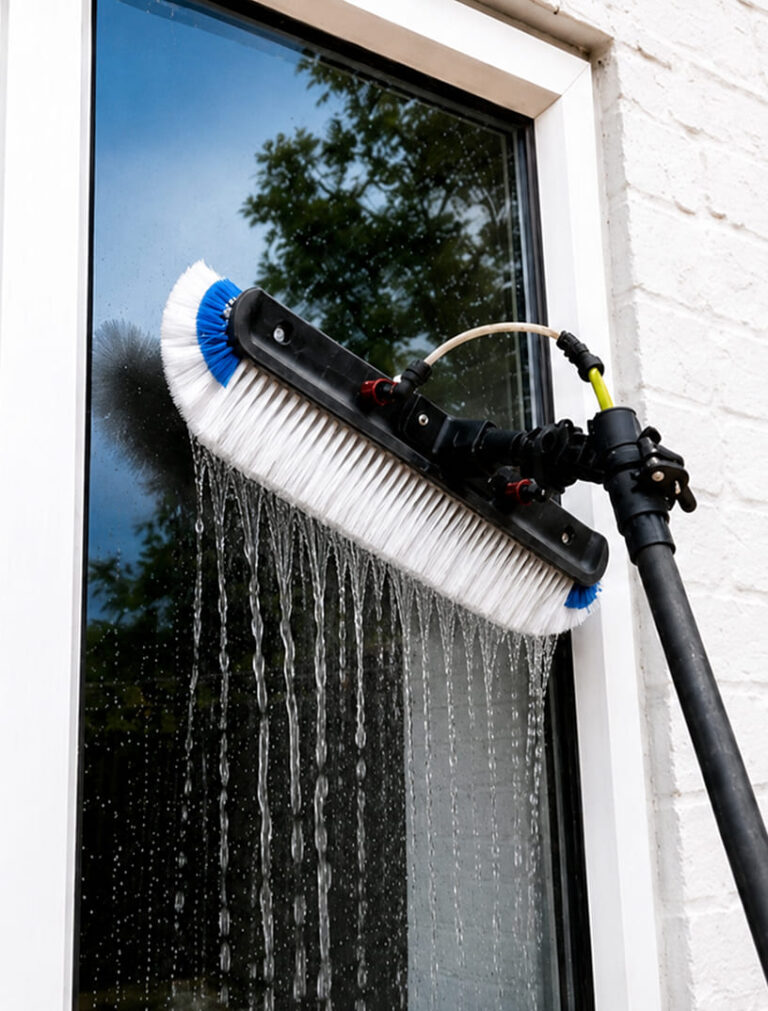
Professional water-fed pole systems can be particularly useful for education premises because they allow high-level windows to be cleaned from the ground in many situations. Klenza uses purified water systems for streak-free window cleaning at heights of up to five storeys.

Two to four times a year: gutter clearing
Gutters and downpipes are among the most important areas to include in a school’s maintenance plan. Leaves, moss, silt, balls and other debris can restrict the flow of rainwater, particularly during autumn and winter.
A sensible starting point is to arrange gutter clearing:
- In spring, after winter weather
- In autumn, after the main leaf fall
- After severe storms
- More frequently where there are mature trees nearby
- More frequently on buildings with known drainage issues
Some school maintenance guidance recommends clearing gutters and drainage channels a minimum of four times a year, with the frequency adjusted for local conditions.
Blocked gutters may cause rainwater to overflow onto walls, windows, fascias, soffits and paths. In freezing weather, wet areas around entrances may also become slippery. Keeping drainage systems clear helps direct water away from the building and can reduce the risk of avoidable water-related damage.
Ground-based gutter vacuum systems can help reduce disruption and the need for ladders in suitable areas. Any work should still be assessed site by site, with access arrangements and exclusion zones agreed in advance.
Twice a year: fascia, soffit and external gutter cleaning
Fascias, soffits and the outside of guttering are often overlooked because they sit above eye level. However, they are visible parts of the building envelope and can collect algae, dirt, cobwebs and weather staining.
A six-monthly visual inspection is useful, while professional cleaning is often appropriate annually. A school may need more frequent cleaning where rooflines are shaded, exposed to trees or affected by pollution.
Regular cleaning can help:
- Maintain the appearance of rooflines
- Reduce the build-up of organic growth
- Identify staining caused by leaks or overflowing gutters
- Protect the appearance of entrances and main elevations
- Support a consistent, well-maintained school environment
Cleaning should be carried out with methods suitable for the material and condition of the fascia, soffit and guttering. This is particularly important on older buildings or areas where fixings and joints may already be vulnerable.
Annually: roof inspection and maintenance planning
Roofs should be visually reviewed as part of the school’s annual maintenance planning, with additional checks after severe weather. A roof inspection is not the same as a roof clean or a formal condition survey, so specialist advice may be appropriate where there are signs of damage or water ingress.
During planned roof maintenance, attention may be given to:
- Moss, algae and lichen growth
- Leaves and debris in valleys
- Blocked outlets and drainage channels
- Cracked or displaced tiles
- Flashing around chimneys, vents and roof windows
- Signs of ponding or water staining
- Debris that could fall onto occupied areas
Deep roof cleaning may be required every two to three years, but this should depend on the roof covering, organic growth, exposure and condition. Cleaning too aggressively or using an unsuitable method may damage some roofing materials, so the surface should be assessed before work begins.
Klenza’s roof maintenance guide explains how moss and debris can hold moisture against roof surfaces and interfere with drainage. Our approach is to use methods suited to the roof rather than applying a single process to every building.
Every two to five years: render and external wall cleaning
Render, brickwork, stone and cladding can accumulate algae, moss, pollution marks, rainwater staining and general dirt. Shaded elevations and walls close to trees may show organic growth more quickly than exposed surfaces.
Many schools may benefit from external wall or render cleaning every three to five years, with earlier cleaning where:
- Algae is spreading across a prominent elevation
- Staining is affecting the school entrance
- Render appears discoloured or neglected
- Nearby vegetation is contributing to organic growth
- The site is being prepared for an inspection, open day or refurbishment
The correct method will depend on the surface. Render can be particularly sensitive to abrasion and excessive pressure, so a non-abrasive approach may help preserve the finish while removing staining.
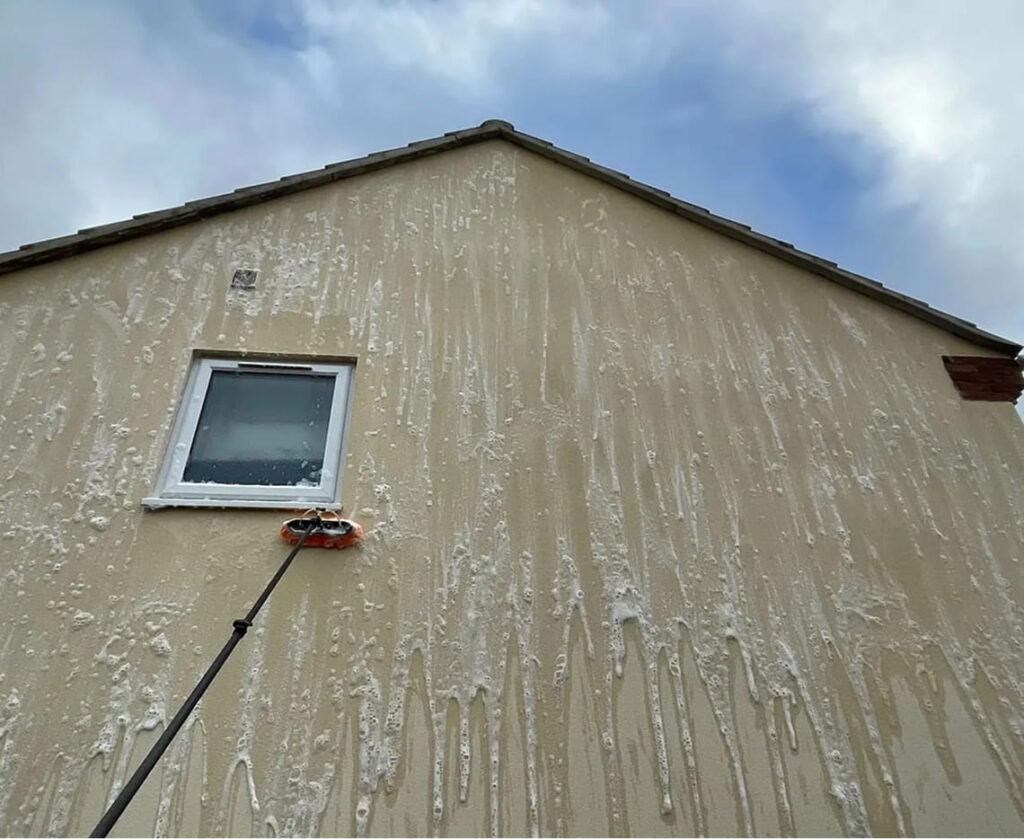
Klenza’s exterior wall cleaning service covers the careful removal of algae, moss, lichen, weather staining and surface grime from suitable external surfaces.
Safety, safeguarding and reducing disruption
Cleaning work on a school site needs to be planned around more than access and equipment. Pupils, staff, visitors and contractors may all be moving through the area, so the work plan should consider safeguarding, site security and daily routines.
Before work begins, your school and contractor should agree:
- The areas to be cleaned
- Access and parking arrangements
- Suitable working hours
- Exclusion zones and warning signage
- How pupils and visitors will be kept away from equipment
- Where water, hoses and machinery will be positioned
- Emergency access and fire routes
- How the site will be left at the end of each visit
- Communication arrangements with the premises team
The GOV.UK guidance advises schools to appoint competent contractors, share relevant site information and ensure that site- and task-specific risk assessments and method statements are in place where appropriate.
For safeguarding, schools should also follow their own contractor-vetting and site-access procedures. Depending on the nature and timing of the work, this may include signing-in requirements, escorted access and restrictions around occupied areas.
Many exterior cleaning tasks can be completed before or after school hours, at weekends or during school holidays. Larger roof, render or gutter projects may be more suitable for holiday periods, while regular window cleaning can often be scheduled around lessons and break times.
Keep exterior cleaning in your PPM plan
A useful maintenance plan should record:
- The date of each clean or inspection
- The areas completed
- Any defects identified
- Recommended follow-up work
- Contractor details
- Risk assessments and method statements
- Photographs where useful
- The proposed date for the next service
The Department for Education’s estate guidance recommends that maintenance planning may cover a three- to five-year period, with works scheduled for each year. Including exterior cleaning within this plan can make budgeting easier and reduce reliance on reactive call-outs.
Why schools choose Klenza
Klenza provides professional exterior cleaning for commercial and education premises, with more than 20 years of experience in property care.
Our service is built around:
- Reliable, customer-focused communication
- Commercial cleaning capability
- Careful planning around school hours and holidays
- Professional equipment for high-level access
- Methods selected for the surface and condition
- Clear quotations and agreed work scopes
- A tidy, considerate approach on occupied sites
- Roof, window, gutter, render, fascia and soffit cleaning
Whether you need a one-off clean before the new term or a recurring maintenance programme, we can help you develop a schedule suited to your school’s buildings, access requirements and budget.
Contact Klenza to discuss your school’s exterior cleaning requirements and arrange a quotation.
Frequently asked questions
Is exterior cleaning a legal requirement for schools?
There is no single cleaning frequency that applies to every school. However, schools have responsibilities to manage their premises safely and maintain suitable learning environments. Exterior cleaning should form part of a wider risk-based maintenance and inspection programme.
Should schools arrange gutter cleaning during the holidays?
School holidays can be a suitable time for more involved gutter, roof or render work because there are fewer pupils and visitors on site. However, regular work may also be possible during term time if the contractor uses suitable controls and works around the school timetable.
How often should school windows be cleaned?
Many schools choose a termly external window-cleaning schedule, with more frequent cleaning for entrances, low-level glazing and heavily used areas. The best frequency depends on traffic, pollution, weather exposure and the image your school needs to maintain.
Can Klenza provide a recurring maintenance schedule?
Yes. Klenza can discuss a one-off project or help plan recurring roof, window, gutter, render, fascia and soffit cleaning around your school calendar.